Trends in Heavy Metal Deposition across the UK Heavy Metals Network
2 min read · Last updated 1 October 2026
Overview
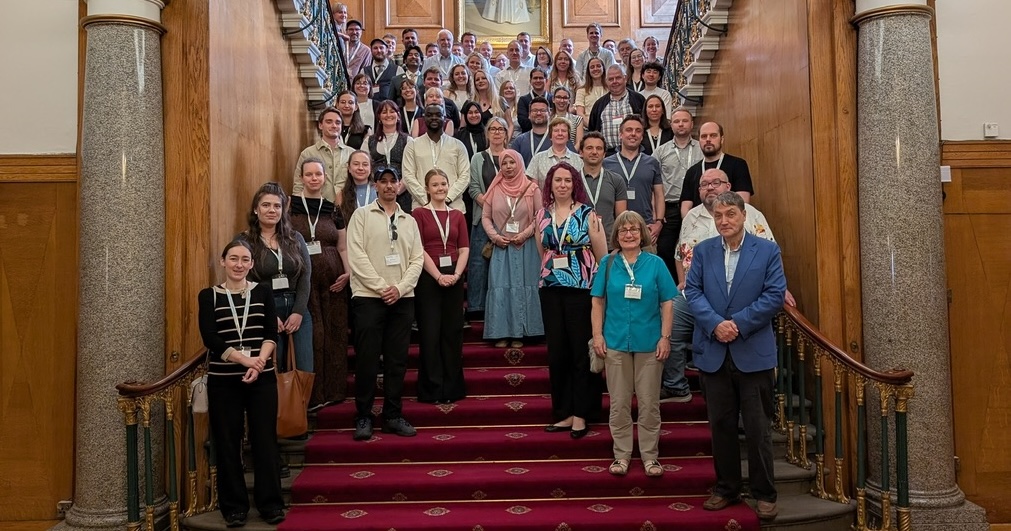
The 22nd Biennial National Atomic Spectroscopy Symposium (BNASS), brought together the UK's atomic spectroscopy community, researchers from academia, national laboratories, and industry, at Cutlers' Hall, Sheffield, in July 2026. Organised by the RSC Atomic Spectroscopy Group, BNASS is the principal venue for the community to share methodological advances, present applied findings, and debate the direction of the field. The programme at this edition spanned environmental trace element analysis and long-term atmospheric monitoring, single-cell ICP-MS, nanoparticle characterisation, and hyphenated techniques for medical radionuclides.
A recurring question across sessions: what does the community actually need from long-term environmental monitoring programmes, and how far do current analytical capabilities meet that need?
What I Presented
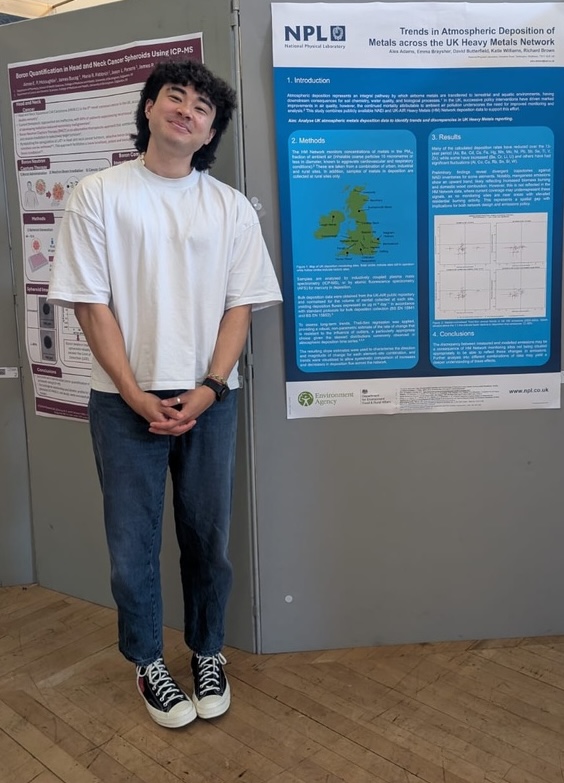
I gave a lightning talk and poster on temporal trends in atmospheric heavy metal deposition across the UK Heavy Metals Network, work carried out at the National Physical Laboratory. The analysis draws on long-term deposition data measured by ICP-MS and AFS across the monitoring network, applying Thiel-Sen regression to identify statistically robust directional trends over time. The poster generated substantive discussion, particularly around the challenges of long-term environmental monitoring: maintaining analytical consistency across decades, handling instrumentation and methodological changes, and interpreting trends against a shifting regulatory and emissions backdrop.
Highlights
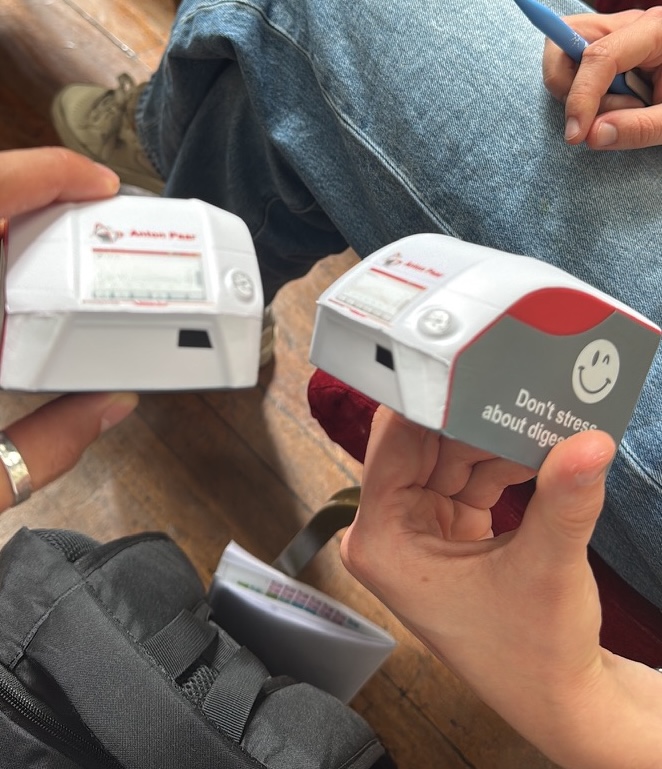
The standout talk for me was the keynote from Katrin Löschner on single particle ICP-MS applied to nanoparticles in foodstuffs, both what the technique can currently resolve and where its limits sit. Work from NPL on radioactivity standards and hyphenated ICP-MS techniques for medical radionuclides illustrated how far the field's applications have diversified beyond their environmental monitoring origins. The poster session was strong, with a high level of geochemical expertise in the room and conversations that extended well beyond the scheduled slot.
The social programme matched the scientific content: a BBQ and quiz on the first evening (with a well-timed early finish for the England World Cup) and a conference dinner at Cutlers' Hall with live music on the second night.